

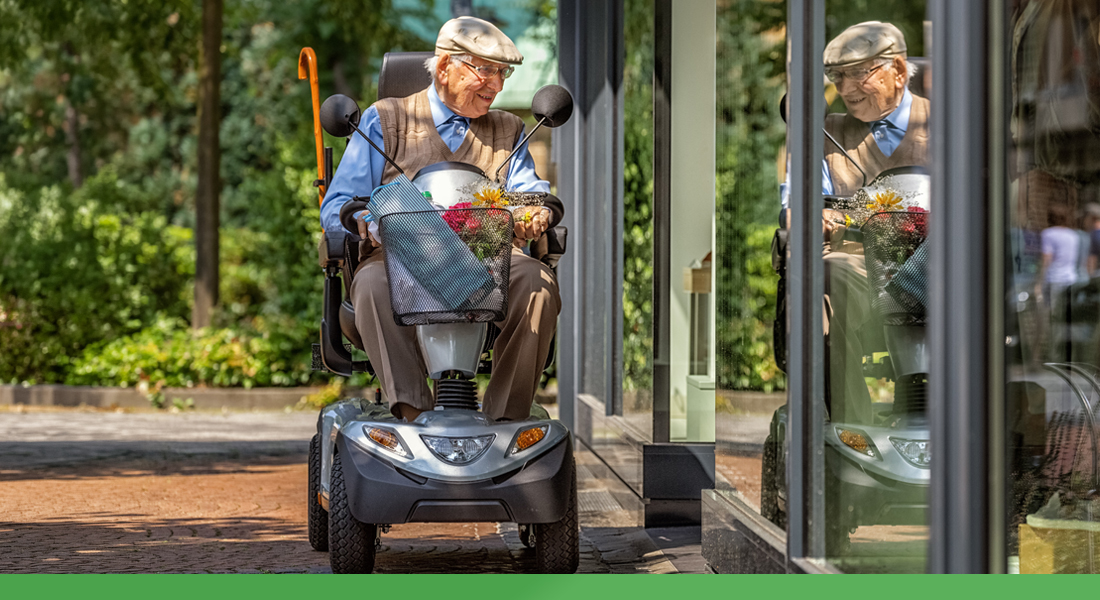
Mobility scooters can make everyday trips feel more manageable when walking longer distances becomes tiring or uncomfortable. For many seniors, the right scooter can help support errands, appointments, neighborhood outings, travel, and time with family while reducing the amount of walking required. The important question is not simply which mobility scooter has the most features. It is which scooter fits the places you go, the way you travel, the amount of support you need, and the space available for storage and maneuvering.
Start with where the scooter will be used most: indoors or outdoors
Indoor use often places more emphasis on turning radius, overall width, and maneuverability through doorways or around furniture. Whereas outdoor use may make stability, ground clearance, battery range, and comfort over longer trips more important.
If the scooter will be used in both settings, think about which environment is less forgiving. A scooter that works well in a wide outdoor area may feel cumbersome inside a store or home, while a compact scooter may not be the best fit for rougher surfaces or longer outdoor trips.
Think about transportation and storage
Some users need a scooter that can be broken down or folded for transport in a vehicle. Others may prioritize a larger scooter that remains assembled and is stored in a garage, entry area, or dedicated space.
Before choosing, consider the weight of individual components, who will load or unload the scooter, available vehicle space, and whether the scooter needs to travel frequently.
Compare the complete daily experience
- Comfort: Does the seat, back support, armrest position, and leg room feel appropriate for the user?
- Controls: Can the user comfortably steer, operate the throttle, and reach the controls?
- Maneuverability: Will the scooter fit through the spaces it needs to navigate?
- Range: Does the expected travel distance fit within the scooter’s operating range with an appropriate margin?
- Transport: Will the scooter need to fit in a vehicle or be handled by a caregiver?
- Storage and charging: Is there a practical place to park and charge the scooter at home?
When a compact or travel scooter may be the better fit
A compact or travel-oriented scooter may be useful for people who frequently transport the scooter by vehicle or need easier maneuverability in stores, hallways, and other tighter spaces. The tradeoff may include smaller seating, lighter construction, or less capacity for long-distance use, depending on the model.
The best choice should still account for comfort, stability, rider size, expected terrain, and who will handle the scooter during transport.
When a larger scooter may be the better fit
A larger scooter may be more appropriate when outdoor travel, longer trips, stability, seating comfort, or more substantial construction are higher priorities. These scooters may require more room for turning, storage, and vehicle transport.
Consider the full route — from where the scooter is stored and charged to where it will be used. Doorways, ramps, lifts, vehicle access, and household pathways can all influence whether the scooter works well in daily life.
Questions to ask before choosing a mobility scooter
- Where will the scooter be used most often?
- How far does the user expect to travel during a typical outing?
- Will the scooter need to fit through narrow doors, hallways, or store aisles?
- Does the scooter need to be transported in a car or SUV?
- Who will lift, fold, disassemble, or load the scooter if needed?
- Where will the scooter be stored and charged?
- What seating, control, and stability features are most important to the rider?
Choose around the routine and not just the specifications
Mobility scooters for seniors are most useful when they fit naturally into everyday life. The right scooter should support the user’s typical destinations, comfort needs, transportation plan, storage space, and ability to operate the controls with confidence. Looking at the complete routine makes it easier to narrow the options.
Explore our mobility scooters or contact a Mobility Specialist to discuss the rider’s needs and everyday routine.