

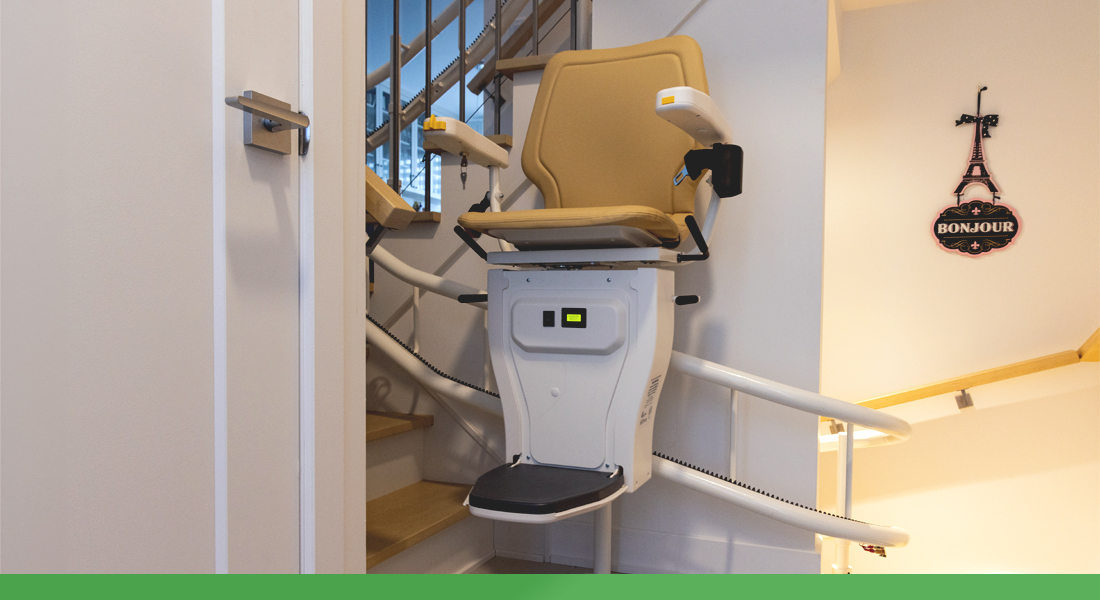
When stairs begin to feel difficult or unsafe, a stairlift can help make more of the home accessible again. One of the first decisions is whether the staircase you have needs a straight stairlift or a curved stairlift. The answer usually depends less on personal preference and more on the shape of the stairs, the available space, and how the lift needs to move through the home.
Understanding the difference before requesting a quote from us can make the buying process easier. Here is a practical way to determine which category is likely to fit your staircase and what to discuss with a stairlift specialist.
What is a straight stair lift?
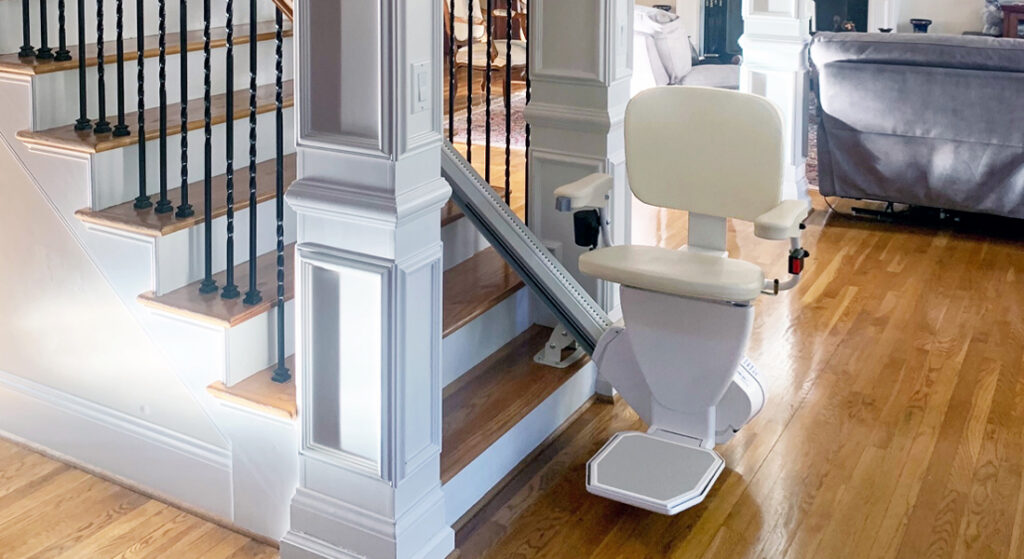
A straight stairlift is designed for staircases that travel in one continuous line without curves, turns, or intermediate landings. If your staircase has a simple, straight layout, a straight stairlift can provide an easy and reliable way to move safely between floors.
With a rail designed to follow the natural path of your stairs, straight stairlifts are typically simple to configure and install. The right fit will depend on your staircase measurements, available space, and nearby doorways.
What is a curved stair lift?
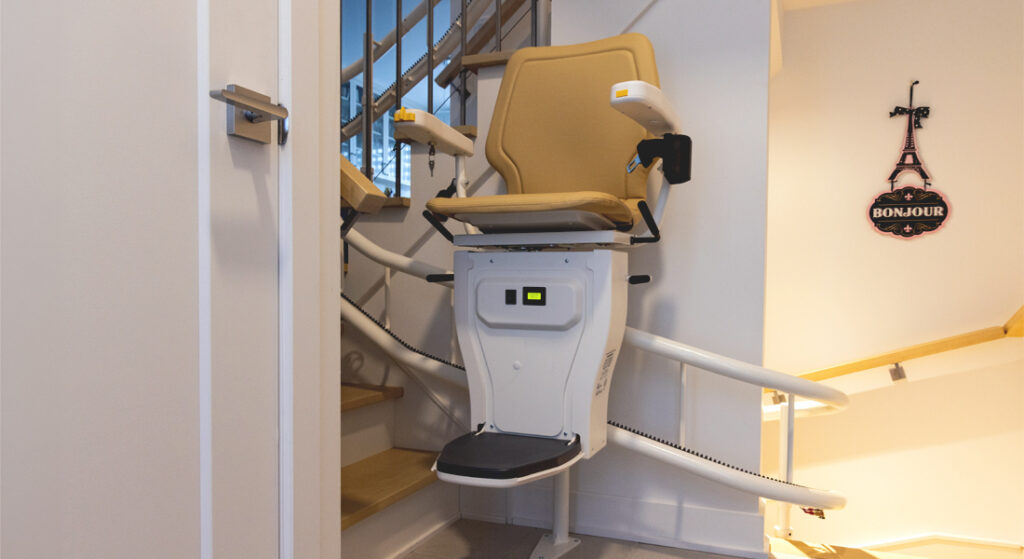
A curved stairlift is designed for a staircases with turns, bends, spiral sections, or intermediate landings. The rail is custom-fit to follow the unique shape of your staircase, allowing you to travel smoothly from one level to the next without switching between multiple lifts.
Curved systems require more individualized planning. The rail must match the route of the staircase, which makes an accurate assessment especially important. A specialist can also help evaluate parking locations at the top and bottom so the chair does not unnecessarily interfere with hallways or landings.
Five questions that usually identify which stairlift is best
- Does the staircase travel in a single straight line? A continuous straight flight usually points toward a straight lift. A turn or curve generally requires a curved solution.
- Is there a landing between flights? If the rider must continue across the landing, a curved rail may provide a continuous trip. Separate straight lifts may be possible in some homes, but they require a transfer and should be evaluated carefully.
- Where should the chair park? Consider doors, walkways, the bottom landing, and the top of the stairs. We can explain rail and seat options that may help keep those areas usable.
- Who will use the lift? Comfort, seat dimensions, controls, mobility, balance, and the ability to get on and off safely should all inform the recommendation.
- Is the staircase indoors or outdoors? Outdoor exposure changes the product and installation requirements. Ask specifically about equipment intended for the location.
Should two straight lifts replace one curved lift?
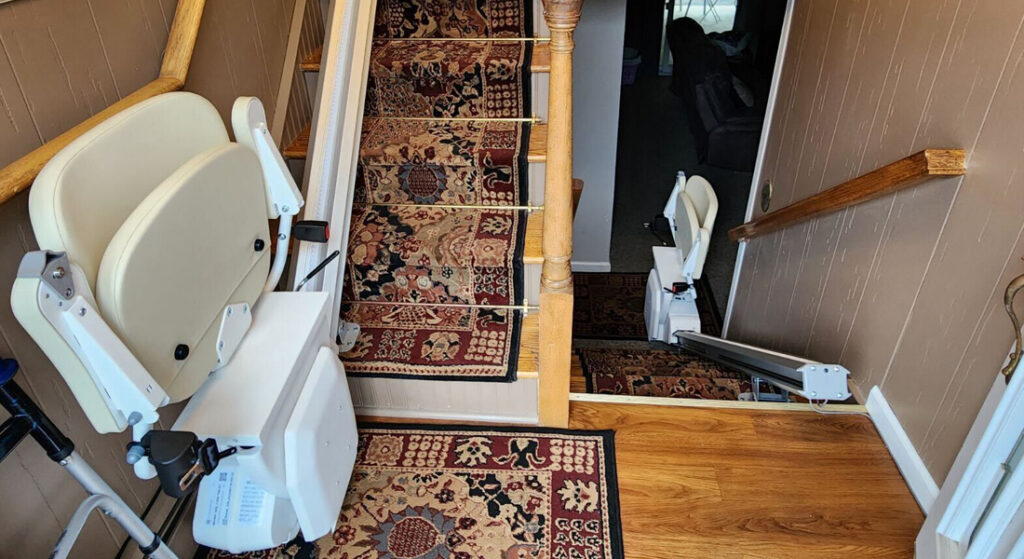
On a staircase with a landing, some households consider installing one straight lift on each flight. That approach can sometimes be practical, but it also means the rider must get off one chair, cross the landing, and transfer to the second. For someone with limited balance or mobility, that extra transfer may undermine the reason for installing a lift in the first place.
What to prepare before speaking with our Mobility Specialist
- Photos of the staircase from the top and bottom
- Photos of any turns, landings, doors, or obstructions
- The approximate number of steps
- Whether the preferred parking position is upstairs, downstairs, or away from a doorway
- Any mobility, balance, or seating concerns the specialist should consider
The right stairlift starts with the right fit
A stairlift should fit the staircase, the home, and the person using it. Straight systems can be an efficient solution for a single-flight staircase, while curved systems create a continuous route around bends and across landings. The best next step is a careful assessment that considers the complete trip—not just the rail.
Explore our stairlifts or contact a Mobility Specialist to discuss your staircase and the options available for your home.