

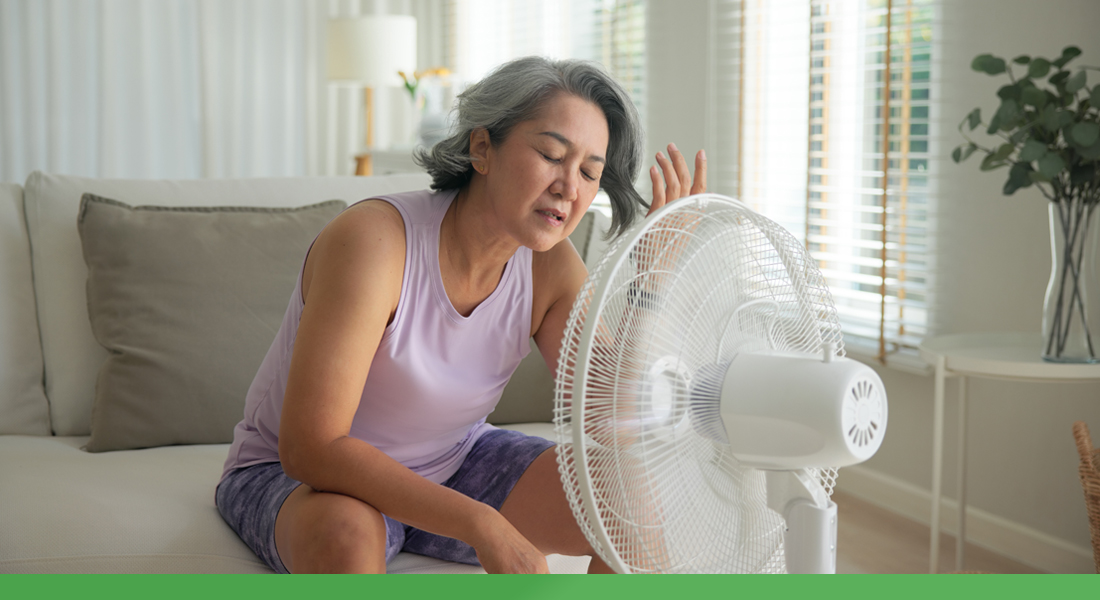
It’s been quite the summer this year and although we only have a month left of summer, the temperature doesn’t seem to be lowering any time soon. When temperatures climb, we often think about the physical effects of the heat like feeling extra thirsty, sweating more than usual or noticing your heart beating faster. But, extreme heat can affect more than just your body. It can also have an impact on your mental well-being.
Research has found a connection between higher temperatures and an increase in ER visits for mental health concerns, including anxiety, stress and mood disorders. Older adults may be especially vulnerable to these effects. That’s why staying cool and comfortable during hot weather isn’t just important for your physical health — it can be an important part of taking care of your overall well-being, too.
Dr. Lorenzo Norris, an associate professor of psychiatry and behavioral sciences at the George Washington University School of Medicine and Health Sciences explains “When you’re getting hot, it’s not necessarily a coincidence that people start to lose a little bit of their patience, their focus, they may get a little bit emotionally unbalanced. It’s not just strictly due to the stress of being hot. Your body’s actually using the same systems that it uses to regulate your mood, to regulate heat.”
Older adults face higher risks from heat
Certain medications commonly taken by adults 50 and older, including some blood pressure medications and diuretics, can affect sweating or blood flow. This may make it harder for the body to stay cool and can increase the risk of overheating which may also leave you feeling more anxious or frustrated. That’s why you might see someone being a bit more agitated when it’s hot out.
Staying hydrated is especially important when it comes to the heat. As we get older, our sense of thirst may not be as strong, making it easier to become dehydrated without realizing it. Even mild dehydration can affect concentration, decision-making and mood, so it’s a good idea to drink water regularly throughout the day even if you don’t feel particularly thirsty. Hot weather can make it harder to get a good night’s sleep. Poor sleep can leave you feeling more tired, irritable or overwhelmed the following day. If you’re having a hard time sleeping, try using a fan, cooling bedding or blackout curtains, taking a cool shower before bed or lowering the room temperature when possible. A cooler, more comfortable sleep environment can help you rest easier and feel more like yourself the next day.
What are the warning signs to look for?
It’s important to pay attention to changes in your mood during especially hot days. Feeling unusually irritable, anxious or simply not like yourself could be your body’s way of letting you know it’s having a harder time staying cool.
If you are experiencing any of the following, it may be a sign that your body is over heating:
- heart racing
- over sweating
- dizziness
- shortness of breath
So, what do you do if you’re showing these signs?
- have a glass of cold water
- hold a cold cloth on back of your neck or wrist
Photo Credit: https://stock.adobe.com/images/asia-adult-people-middle-age-old-woman-sit-at-sofa-home-feel-hot-flash-fever-use-fan-waving-hand-blowing-wind-face-elder-health-care-summer-heat-aging-issue-sad-pain-sweat-tired-stroke-suffer-stress/1435115794?prev_url=detail